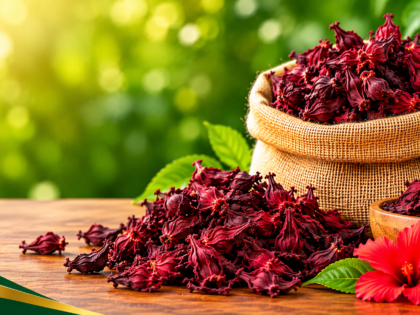
If you buy dried hibiscus from Nigeria, timing matters. Knowing the hibiscus harvest season in Nigeria helps you plan orders, understand price movements and judge the freshness of what you are offered. This article is part of our guide to hibiscus export from Nigeria.
Hibiscus grows mainly in the north. Jigawa, Kano, Katsina, Bauchi and Gombe are often named as major producing states, and other northern states such as Kebbi, Sokoto, Niger and Yobe also grow it. Trade reports often describe Jigawa as a leading area. Kano is a major trading and processing centre, and many consignments pass through its markets.
The growing cycle
Hibiscus is planted at the start of the rainy season. The crop takes roughly three to four months to mature, and it is tolerant of dry conditions. Many farmers grow it alongside other crops or around the edge of fields. This matters for buyers because supply depends on how many farmers decide to plant it, and that decision follows prices from the previous season.
When is the harvest?
Harvest usually starts around October. The main supply comes through the dry season, from about November into the early months of the new year, and some reports describe peak production reaching toward April. Exact timing varies with planting dates, rainfall and region.
Harvest is done by hand. The best practice is to pick on a dry, sunny day once the morning dew has gone, so the calyces dry quickly and keep their colour.
What the season means for quality
New crop (harvest period). Calyces are freshest and usually the best coloured. Competition from buyers can push prices up, so planning early helps.
Mid-season. Supply is broad and well sorted. This is often a good window for volume orders.
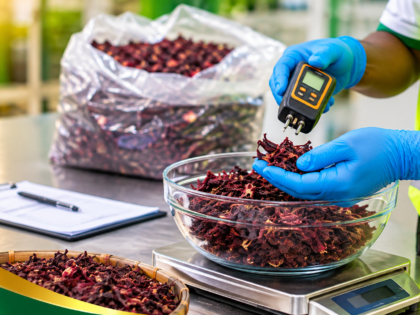
Late season and carry-over stock. Product has been stored for months. Storage quality becomes the issue, so check colour, moisture and any sign of pests.
Well-dried and well-protected hibiscus can last a long time, but only if it has been kept dry and clean.
Planning your purchase
Decide your volume early. Tell your exporter before the harvest what you will need.
Ask about crop year. Know whether the lot is new crop or carry-over.
Approve a sample from the actual lot. Do not approve a sample from a different batch.
Allow time for cleaning, testing and documents. Cleaning, COA testing, phytosanitary inspection and Form NXP all take time.
Book shipping in good time. Port and shipping schedules can tighten around peak periods.
Risks to watch
Weather can affect yields, security concerns in some northern areas can disrupt movement of goods, and demand shifts can move prices. A good exporter will tell you about these honestly and plan around them.
How to use the hibiscus harvest season in Nigeria to your advantage
Understanding the hibiscus harvest season in Nigeria is only useful if it changes what you do. Four practical moves help:
Commit early. If you need a large volume of new-crop product, tell your supplier before harvest. Suppliers allocate their best lots to committed buyers first.
Split your buying. Buy part of your volume at harvest and part later, so that you are not exposed to one price point.
Ask about the crop year on every lot. New-crop and carry-over product can look similar in a sample but perform differently in storage.
Keep a retained sample from each approved lot. If a late shipment looks different, you can compare it against the sample.
What can disrupt the season
Heavy or late rains, pests, changes in what farmers choose to plant and local security conditions can all change supply. Prices respond quickly. A supplier who tells you about these risks in advance is easier to plan with than one who promises everything is fine. We prefer to give you an honest view of availability when we quote.
Yes. Properly dried and stored hibiscus can be supplied through much of the year. Check storage quality, colour and moisture carefully for older stock.
Which Nigerian state is best for hibiscus?
Several northern states produce quality hibiscus. A good exporter chooses the supplier by quality and reliability, not only by state.
Planning to source from Nigeria?
Send us your specification, quantity, packaging, destination and Incoterm. We will review it and reply with the right sourcing and commercial process.
agrobridgeglobal