Hibiscus Export from Nigeria: The Complete Buyer’s Guide
-
agrobridgeglobal
- Posted on
- 0 comments

Hibiscus Export from Nigeria: Complete Buyer’s Guide
Hibiscus Export · Pillar guide
By the Agro-Bridge editorial team · Updated November 2026 · 6 min read
Hibiscus export from Nigeria is one of the most important agricultural trades in West Africa. Nigeria supplies large volumes of dried hibiscus flowers to beverage makers, tea blenders and ingredient buyers around the world. It is also a trade where small mistakes in specification, storage or paperwork can cost a buyer a whole container.
This guide explains how the trade works, what to specify, which risks to manage, and how to buy with confidence. It is written for importers, procurement teams and ingredient traders. If you want to go deeper on any topic, each section links to a focused article.
In this guide
- What is dried hibiscus?
- Why buyers source hibiscus from Nigeria
- When is the harvest?
- How dried hibiscus is produced
- What to put in your specification
- The main quality risks
- Documents you should expect
- Packing, storing and shipping
- How to buy hibiscus from Nigeria safely
- What affects the price?
- Common mistakes in hibiscus export from Nigeria
- A practical timeline for planning an order
- Why consistency beats the lowest price
- Work with a specification-led exporter
- Frequently asked questions
What is dried hibiscus?
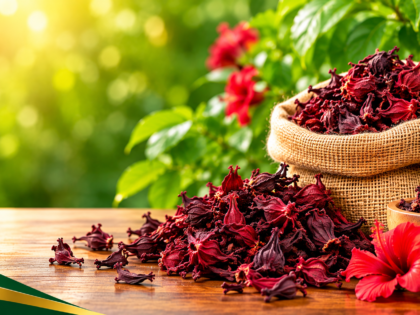
The product traded as dried hibiscus is the dried calyx of Hibiscus sabdariffa, a plant also known as roselle, sorrel, bissap or zobo. The calyx is the red, fleshy outer cup that surrounds the seed pod. Once dried, it gives teas and drinks a deep red colour and a tart, fruity taste. Buyers also use it for natural colouring, flavouring and extracts. See dried hibiscus uses and global demand.
Why buyers source hibiscus from Nigeria
Nigeria is one of the world's leading producers of hibiscus. The crop grows well in the dry, sunny north, it tolerates drought, and it is labour intensive to harvest and process, which suits Nigeria's farming communities. Jigawa, Kano, Katsina, Bauchi and Gombe are commonly named as major producing states.
Mexico has been the biggest buyer of Nigerian hibiscus, taking the large majority of exports according to trade association figures reported in Nigerian media. Mexico suspended imports from Nigeria in 2017 after storage pests were found in some cargoes, then lifted the ban in 2021. That episode is the best reminder in the whole trade of why clean storage, correct treatment and a proper phytosanitary certificate matter.
When is the harvest?
Harvest usually begins around October, and the main supply runs through the dry season. Well-dried hibiscus can be stored and shipped for much of the rest of the year. Timing affects both price and quality, so read our guide to the Nigerian hibiscus harvest season.
How dried hibiscus is produced
- Harvest. Farmers pick the calyces when mature, ideally on a dry day.
- Separation. The calyx is separated from the seed pod.
- Drying. The calyces are dried, usually in the sun, until the moisture is low enough for safe storage.
- Cleaning and sorting. Stems, leaves, sand, seed fragments and other foreign matter are removed, by hand or by machine.
- Packing. The product is packed, commonly in 25 kg bags.
Quality is decided mostly at steps 3 and 4. Poor drying causes mould and colour loss. Poor cleaning leaves foreign matter.
What to put in your specification
A clear specification is the best protection a buyer has. At a minimum, define the following.
| Item | What to agree |
|---|---|
| Product | Whole dried Hibiscus sabdariffa calyces, or cut and sifted |
| Colour | Deep red or burgundy, with an approved reference sample |
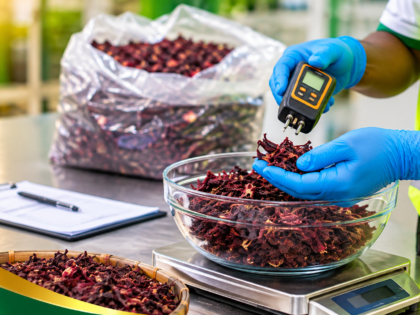
| Moisture | Maximum percentage, supported by COA |
| Foreign matter | Maximum percentage of stems, seed fragments, sand and other matter |
| Damaged or discoloured calyces | Maximum percentage |
| Contamination | No live insects, no mould, no off odours |
| Packaging | Bag type and weight, for example 25 kg bags |
| Documents | Batch COA, phytosanitary certificate and any other certificates |
Our detailed article on the dried hibiscus specification explains each item.
The main quality risks
- Moisture and mould. Hibiscus absorbs moisture easily. Wet product can mould in the container.
- Storage pests. Insects can infest stored product. This is exactly what triggered Mexico's suspension.
- Foreign matter. Sand, stones, stems and seed fragments reduce value and can break a specification.
- Colour loss. Poor drying or long, humid storage turns deep red calyces brown.
- Mixed lots. A container that blends several lots can fail the sample comparison.
Documents you should expect
For a typical shipment of dried hibiscus from Nigeria the document set can include the signed contract or PO, proforma and commercial invoices, packing list, batch COA, phytosanitary certificate from the Nigeria Agricultural Quarantine Service (NAQS), Form NXP, a Certificate of Origin where required and the Bill of Lading. Read our checklist: the complete export documents checklist.
Packing, storing and shipping
Hibiscus is commonly packed in 25 kg bags and shipped in containers. The container must be clean and dry. Our guide on storing, packing and shipping dried hibiscus covers the details.
How to buy hibiscus from Nigeria safely
- Verify the exporter. See how to verify a Nigerian exporter.
- Agree a written specification.
- Ask for a sample and a batch COA.
- Choose secure payment terms. See payment terms for Nigerian agro exports.
- Name the Incoterm and the place. See Incoterms for Nigerian exports.
- Plan pre-shipment inspection.
We cover the whole process in how to buy hibiscus from Nigeria.
What affects the price?
Prices move with the harvest, the quality grade, the level of foreign matter, demand from major buyers, exchange rates, transport costs and the time of year. We do not publish fixed prices. We quote per enquiry, based on your specification.
Common mistakes in hibiscus export from Nigeria
Buyers who are new to hibiscus export from Nigeria tend to repeat the same handful of mistakes. Knowing them saves money.
- Buying on a generic specification. A brochure that says "premium hibiscus" is not a specification. Without numbers for moisture, foreign matter and damaged calyces, you cannot reject anything.
- Approving a sample from a different lot. The sample looks perfect, the container does not. Always tie the sample to a lot number.
- Ignoring storage history. Carry-over stock that has sat in a damp store can look fine and still carry pests or mould. Ask when and where it was stored.
- Skipping inspection to save money. A modest inspection fee costs far less than a rejected container.
- Paying everything in advance. Trust is built by performance. Use terms tied to documents and inspection.
- Forgetting the destination rules. Check your own country's import conditions for plant products before you sign.
A practical timeline for planning an order
Every order is different, but a sensible plan for hibiscus export from Nigeria looks like this: agree the specification, approve a sample, confirm the lot, arrange testing and inspection, process Form NXP and the phytosanitary certificate, load and ship, then check the documents. Allow time for each step, because testing, certificates and bank processing do not happen on the same day. Start early in the season if you need new-crop product.
Why consistency beats the lowest price
A single cheap container is easy to find. What buyers really want is the same colour, the same cleanliness and the same documents on the fifth order as on the first. A supplier who works from your specification, controls loading and keeps the paperwork consistent gives you that. It is the reason we focus on repeat business.
Work with a specification-led exporter
AGRO-BRIDGE EXPORTS GLOBAL LIMITED treats hibiscus as a priority commodity. We start with your specification, verify the supplier, review samples and COAs, run pre-shipment checks and reconcile the documents. See our dried hibiscus flowers page or send your requirement through the quote request form.
Frequently asked questions
Which countries buy hibiscus from Nigeria?
Mexico has been the largest buyer, and buyers in the United States, Europe and Asia also import Nigerian hibiscus. Ask your importer about the rules in your own country.
What is the best packaging for dried hibiscus?
25 kg bags are common. The best option depends on your market, your handling method and the shipping plan. Agree it in the contract.
Is zobo the same as hibiscus?
Zobo is the Nigerian name for the drink made from dried Hibiscus sabdariffa calyces, and many people also use the word for the flowers themselves.
How should I check hibiscus quality?
Compare the shipment against an approved sample, check moisture and foreign matter against your specification, and require a batch COA.
Planning to source from Nigeria?
Send us your specification, quantity, packaging, destination and Incoterm. We will review it and reply with the right sourcing and commercial process.
Request a QuoteContact UsMore in this series
- Dried Hibiscus Specification: Moisture, Colour and Foreign Matter Explained
How to write a dried hibiscus specification that protects you: moisture, colour, foreign matter, damage, packaging and documents. - Hibiscus Harvest Season in Nigeria: Dates, Regions and Quality
When the Nigerian hibiscus harvest starts, which states grow it, and how timing affects quality, supply and your buying plan. - Dried Hibiscus Uses: Teas, Beverages, Extracts and Global Demand
Where dried hibiscus ends up: teas, cold drinks, colour, extracts and food, and what each buyer expects from the raw material. - How to Buy Hibiscus from Nigeria Safely: A Step-by-Step Buyer Guide
Seven steps to buy hibiscus from Nigeria safely, from checking the exporter to inspection and documents. - Dried Hibiscus Packaging, Storage and Shipping: A Practical Guide
How to keep dried hibiscus dry, clean and pest-free from the warehouse to the container, and what to check at loading.
Other guides