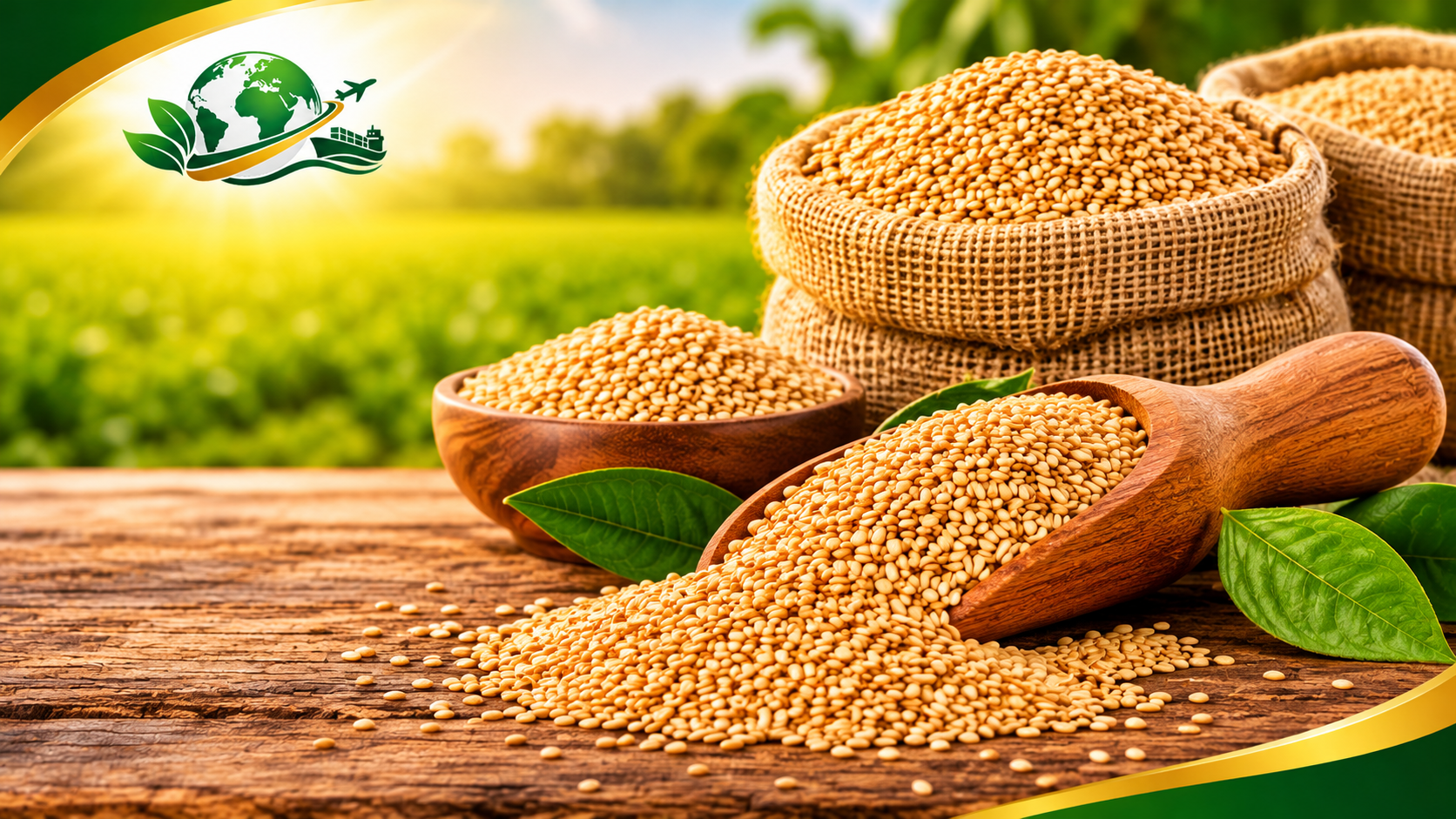
When you order sesame, one of your first choices is hulled sesame seeds or natural (unhulled) seeds. The decision changes price, flavour, appearance and how you must test the product. This article is part of our guide to sesame seed export from Nigeria.
Natural sesame is the seed with its outer hull still on. The seed is cleaned to a stated purity but not hulled. It is the standard export form for much of Nigeria's sesame. Natural seed keeps well, has a slightly stronger, nuttier flavour and a darker, less uniform look, and the hull contains compounds that give a mild bitterness.
What is hulled sesame?
Hulled sesame has had the hull removed by soaking and mechanical processing, then it is dried. The result is a whiter, softer and milder seed. Hulling costs money and creates more steps where moisture and contamination can enter, so hulled seed needs careful drying and testing.
Main differences
Feature
Natural
Hulled
Appearance
Whitish to tan, slightly uneven
Bright white and uniform
Flavour
Nuttier, slightly bitter
Mild and sweet
Price
Lower
Higher
Shelf life
Longer
Shorter, more sensitive to moisture and air
Processing
Cleaned only
Cleaned, soaked, hulled, dried
Typical use
Oil, further processing, some foods
Tahini, halva, bakery, snacks
Which should you buy?
Oil crushers usually buy natural seed, because they care about oil content and cost.
Tahini and halva makers may buy either. Some hull their own seed, and others buy hulled seed to save a step.
Bakeries and snack makers often want hulled, bright white seed with very clean appearance.
Food manufacturers choose by recipe and by the testing their market requires.
Quality points for each type
For natural sesame, focus on purity, moisture, oil content, free fatty acids and foreign matter.
For hulled sesame, add colour, residual hull (how much hull is still on the seed), moisture, rancidity and microbiological testing. The extra processing gives more routes for contamination, so tests matter more.
The choice between natural and hulled sesame also changes how you store the product. Hulled sesame seeds have lost their protective outer layer, so they are more sensitive to moisture, air and light. They can turn rancid faster. Keep them cool, dry and sealed, and plan to use them sooner. Natural seed is more forgiving, which is one reason it is the standard export form.
Questions to ask your supplier
Is the seed natural or hulled, and what is the colour?
What purity and residual hull level can you guarantee for hulled seed?
How is moisture controlled after hulling and drying?
What food-safety tests do you run on each lot?
Can you send a sample from the actual lot with a COA?
Hulled sesame seeds carry more processing steps, so ask more questions before you buy.
Source with a specification-led exporter
Tell us which type you need and why. We will source against your specification and confirm what is available. See our Nigerian sesame seeds page or request a quote.
Planning to source from Nigeria?
Send us your specification, quantity, packaging, destination and Incoterm. We will review it and reply with the right sourcing and commercial process.
agrobridgeglobal